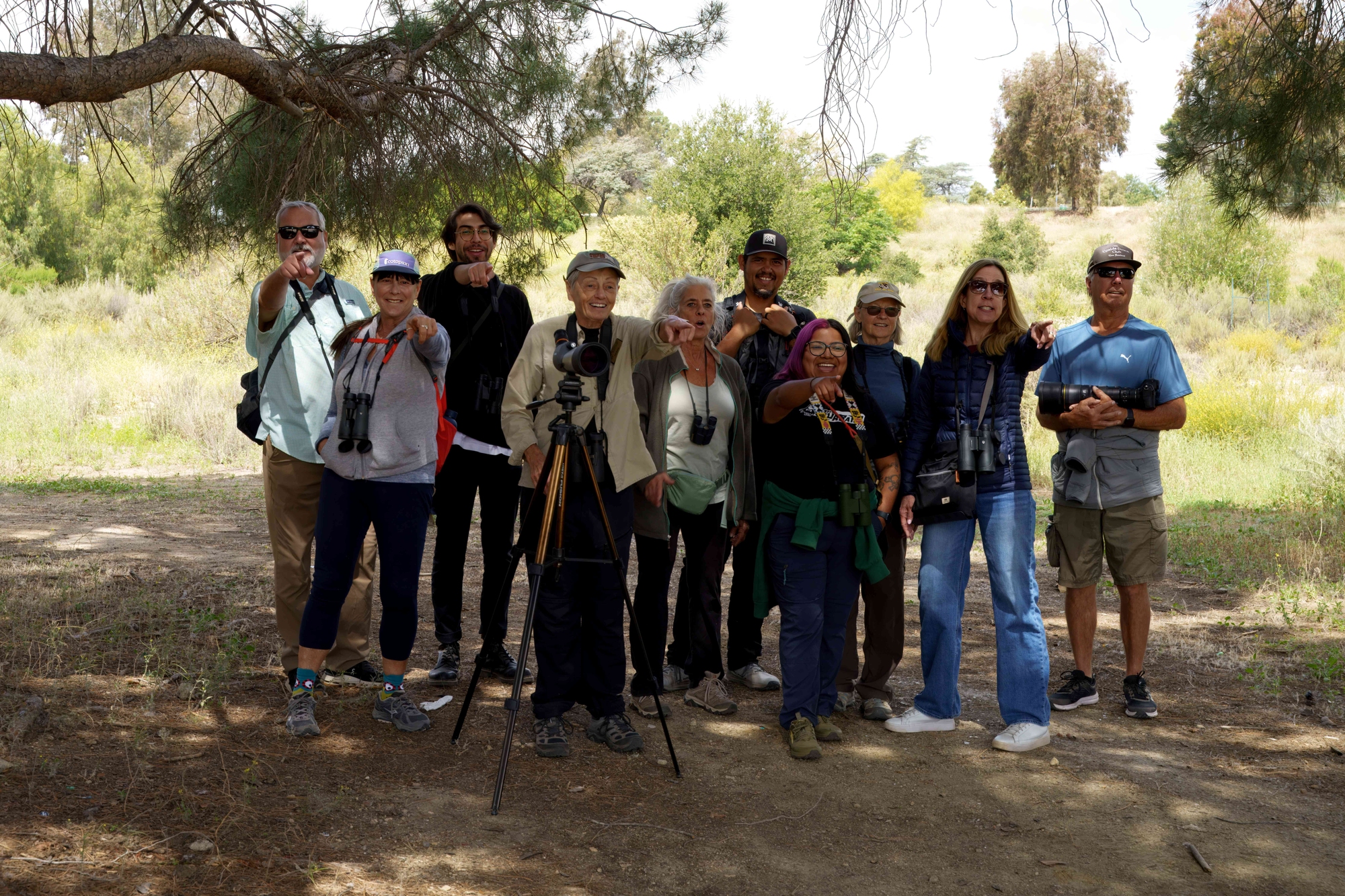
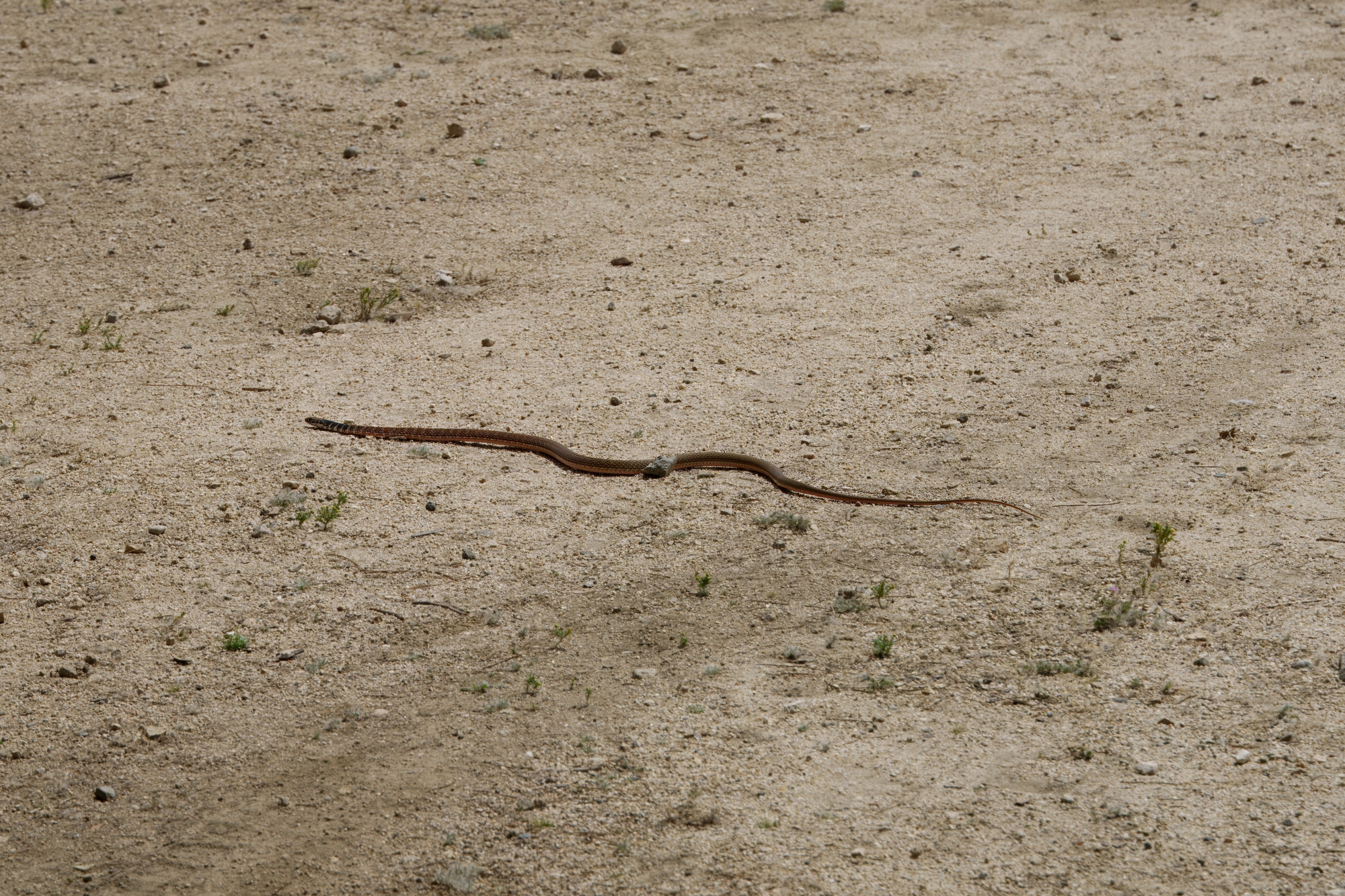
Usually our birdwalk groups are not quite this excitable, but the 4’ Coachwhip(Masticophis flagellum) slithering unseen behind photographer Steve Barbusa got everyone’s attention!
It is a pleasure leading the Hansen Dam bird walks for the San Fernando Valley Audubon Society. Our first test walk led to sightings of a pair of Northern Harriers!! We started the walks at Hansen in 2015, and for several years had the walks at Orcas Equestrian Park along the Tujunga Wash with a high point to see Cactus Wrens – there was a large accumulation of nests in cholla thickets there. After fire destroyed a significant portion of habitat at Orcas several years ago, I moved the walk to the dam area. Then the pandemic hit. For at least a year, I did the walk alone every 4th Saturday just for historical record. Gradually, more and more folks joined informally.
We currently meet at the Hansen Dam Ranger Station at 0800 every fourth Saturday of the month unless it is seriously raining or officially and very rarely cancelled. The Hansen Dam is at the confluence of the Big and Little Tujunga Washes. The basin covers 1461 acres, most of it leased to the City of Los Angeles for recreation purposes. The dam was built in 1940 for flood-risk management for portions of the San Fernando Valley and areas contiguous to the Los Angeles River. Because the U.S. Army Corps of Engineers often leaves flood waters sequestered for significant periods of time, the Hansen Dam walks are occasionally diverted, shortened, and improvised! If conditions are dicey and changing, I check the Hansen Dam Water Data website to see how flooded it is.
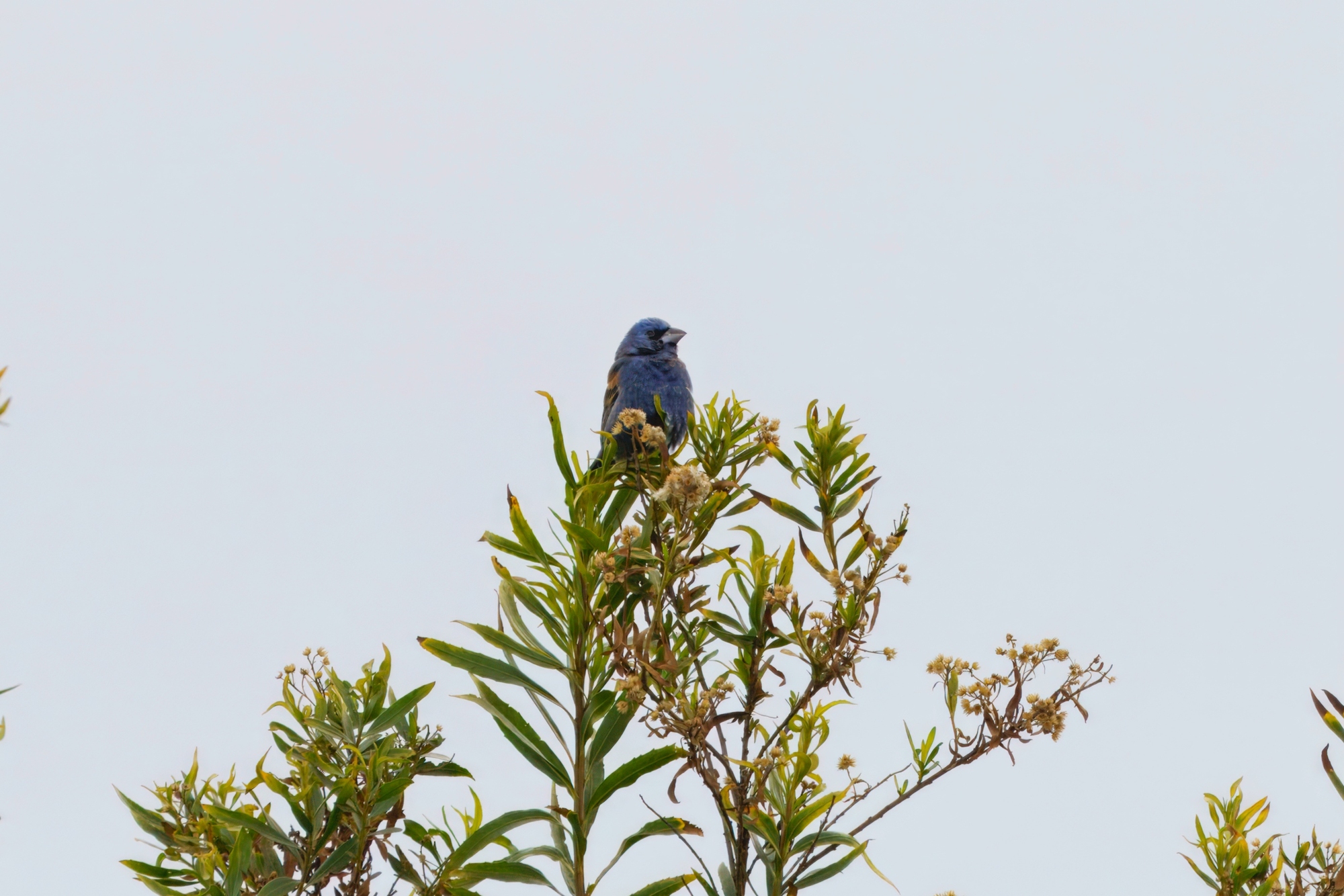
Our April 2026 Birdathon bird walk did not disappoint. We saw many species before even getting too far, including a pair of Red Shouldered Hawks. The weather was cool, and the walk to the back side of the lake was pleasant. We eventually registered 47 species of birds including stunning Western Tanagers and Blue Grosbeaks. The number of birds in the lake remains low for undetermined reasons. The area is host to the endangered least Bell’s Vireo – which we detected at 4 different locations. Interestingly, we found a Brown-headed Cowbird trap placed by the Department of Fish and Wildlife and were there while it was monitored. The cowbirds are brood parasites and further endanger the Bell’s Vireos and other smaller song birds.